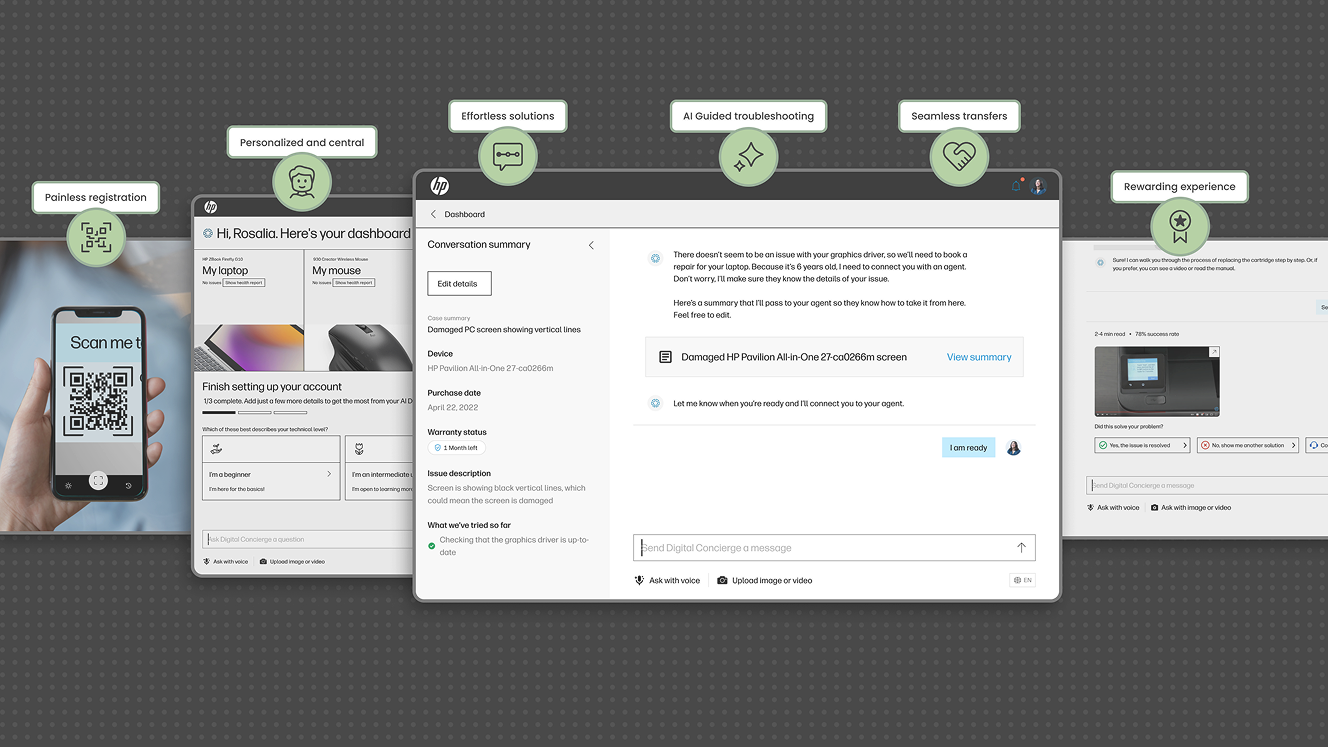
Bringing clarity to complexity at scale.
HP’s customer support experience operates at a significant scale, with clear business drivers around containment, cost reduction, and revenue protection. From a customer perspective, success is measured primarily through Task Completion Rate and customer effort score. Both direct outcomes of improving usability, clarity, and confidence in self-service experiences.
HP inc.
Industry
Information technology
My role
UX strategist

A web of complexity
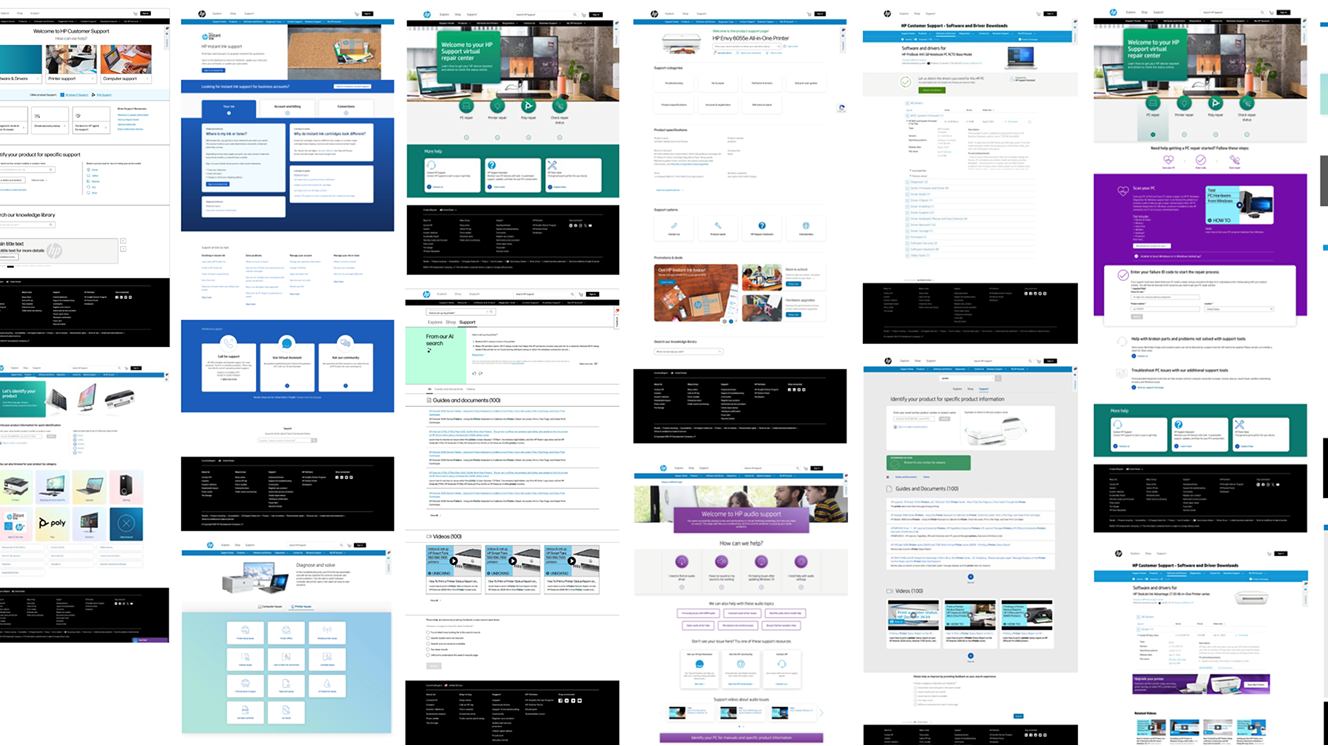
Over time, the support ecosystem has grown increasingly complex. HP supports a broad product portfolio with highly specific issues, backed by more than 100,000 support documents. For customers, this often results in an overwhelming amount of information, difficult navigation, and solutions that can feel too technical to attempt without assistance.
Making sense before making changes
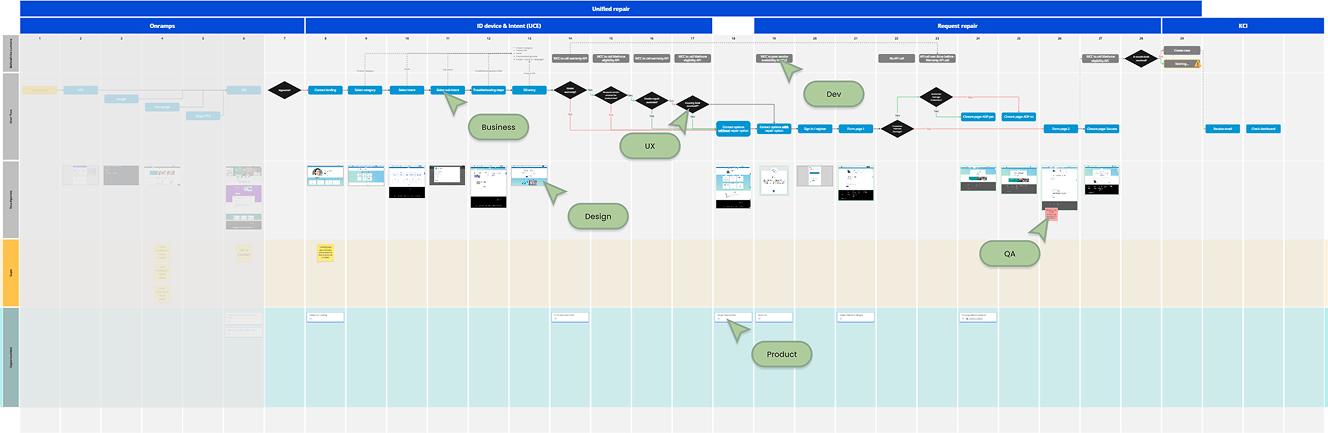
Rather than starting with incremental UI fixes, my focus was on zooming out and establishing a shared, customer-centered understanding of the support experience. I actively advocated for journey mapping as a strategic tool, educating and aligning multidisciplinary teams including product, architecture, engineering, CX, and content around a common view of customer jobs, pain points, and dependencies across touchpoints.
Aligning teams through shared understanding
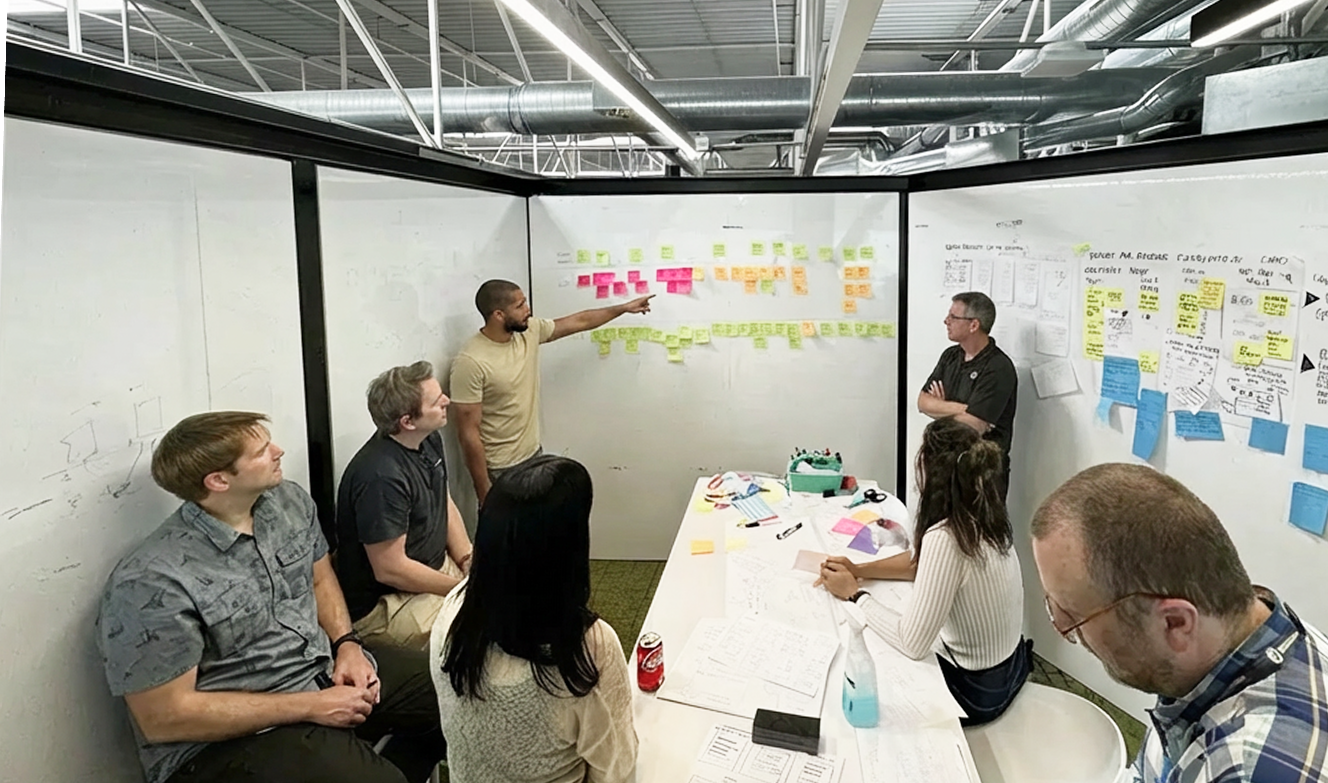
We achieved this by facilitating both face-to-face and remote design thinking workshops, actively involving stakeholders in the process to build shared ownership and understanding. By introducing a journey-based, end-to-end perspective, we simplified complexity and shifted conversations away from isolated features toward customer outcomes. This approach helped define a small set of macro UX foundations that provided direction and consistency, guiding micro-level decisions across teams and initiatives.
From alignment to impact
With a shared, journey-led foundation in place, the work translated into tangible business and customer outcomes. By restructuring support around customer intents and task completion, we reduced reliance on assisted channels, improved containment, and increasing confidence in self-service experiences.
Targeted improvements to high-volume and high-cost issues drive measurable gains in cost savings and revenue, while improvements to clarity, flow, and content directly lifted CES and Task Completion Rate. These outcomes demonstrated that aligning teams around customer journeys and prioritizing the right problems can deliver impact at scale, both for customers and the business.